

Which Parts Require Both Turning and Milling Operations?
Complete Guide
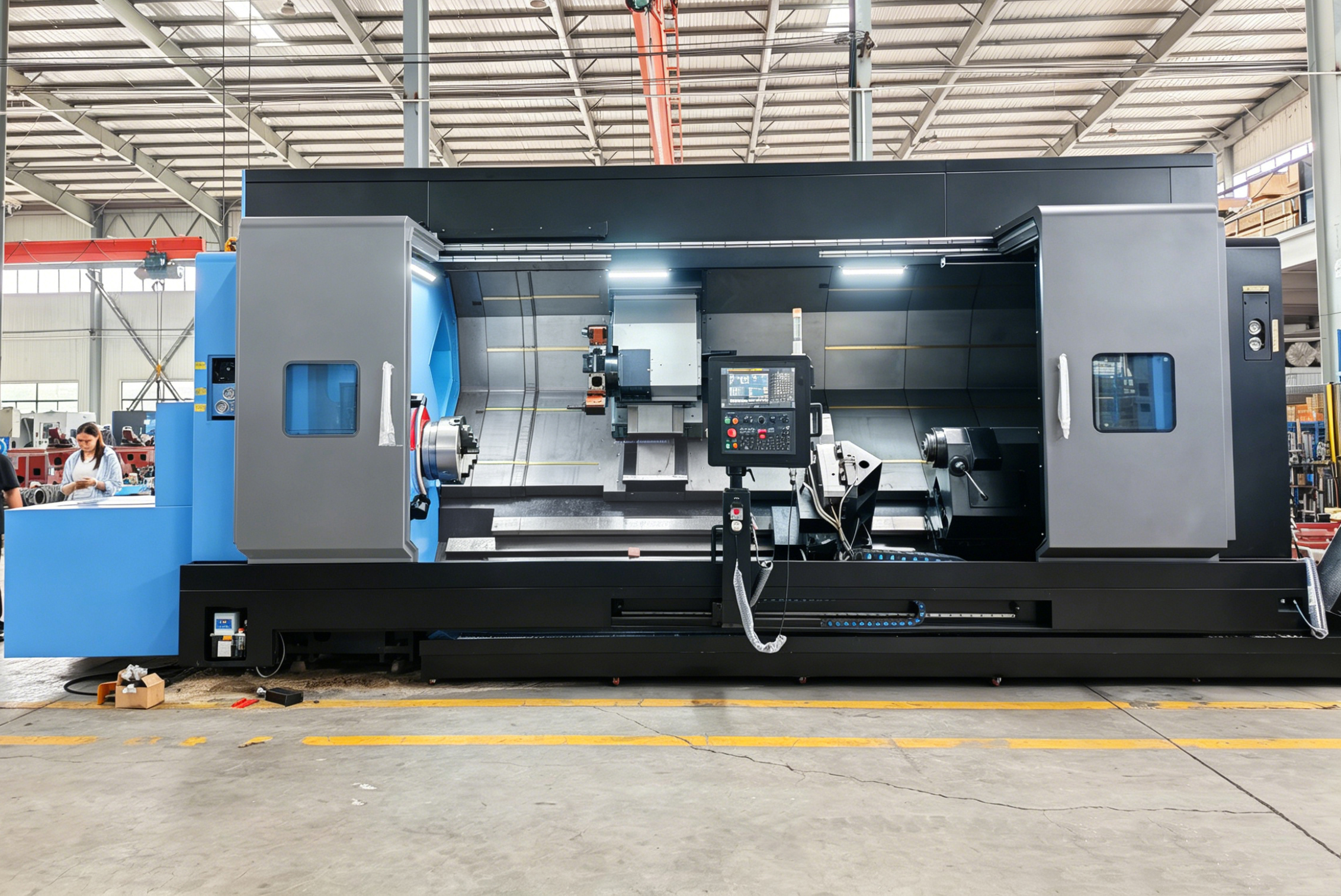
Introduction: The Blurred Line Between CNC Turning and Milling
Traditional CNC manufacturing separates turning for cylindrical parts and milling for irregular contours. However, modern industrial components often feature both rotational symmetry and non-rotational complex features, which means they require both turning and milling operations in one workflow.
Producing these parts on standalone lathes and mills causes repeated re-fixturing, cumulative alignment errors, long cycle times, and high scrap rates. To solve this pain point, manufacturers adopt integrated machining solutions.Dongs Solution multi-functional turning centers combine precision turning and milling in a single setup, ensuring microscopic tolerances and superior surface finishes for complex workpieces.
What Are Turn-Mill Combined Parts?
Parts that require both turning and milling are defined as components with dual geometric characteristics. They have cylindrical, rotational profiles processed by turning, plus flat surfaces, keyways, cross holes, and irregular slots completed by milling.
These parts cannot be produced efficiently with single-process machines. Any manual transfer between equipment will damage geometric integrity and reduce batch consistency, which is critical for high-precision industries.
Which Components Require Dual Turning and Milling Operations?
1. Automotive Transmission & Powertrain Components
The automotive industry is the largest application scenario for turn-mill combined machining. Core components must meet strict concentricity and positioning accuracy standards:
Complex Gear Shafts: Require turning for outer diameter cylindrical profiles and bearing journals, plus milling for external keyways, splines, and offset lubrication holes.
Transmission Housings & Pinions: Need precision boring (turning) for concentric mounting holes and face milling for mounting flats and cooling slots.
Turbocharger Shafts: Combine smooth rotational surfaces with asymmetric milled blade slots for dynamic balance performance.
Dongs Solution power turret lathes support heavy-duty cutting for hardened alloy automotive parts, maintaining micron-level tolerance in one single clamping process.
2. Medical Device Precision Components
Medical parts demand ultra-high precision, biocompatible material processing, and zero error accumulation — making turn-mill integration indispensable:
Surgical Instrument Shanks: Turning creates smooth, ergonomic cylindrical handles; milling processes eccentric mounting slots and assembly notches.
Implant Interface Components: Titanium-based implants require precision turning for joint mating surfaces and 5-axis milling for intricate anti-slip texture grooves and cross fixation holes.
Separate machining will introduce tiny alignment deviations, leading to assembly failure. Dongs Solution medical-grade turning centers deliver stable, repeatable results for small-batch and mass medical production.
3. General Industrial & Hydraulic Components
Beyond automotive and medical, many standard industrial parts also require dual operations:
Eccentric Precision Pins: Cylindrical body via turning, eccentric cam profiles via milling
Hydraulic Valve Spools: Smooth sealing diameters via turning, asymmetric flow grooves via milling
High-Precision Flange Discs: Inner/outer circle turning + distributed mounting hole milling
Why Avoid Separate Turning and Milling Machining?
Many manufacturers still use standalone lathes and machining centers for the above parts, leading to three critical production bottlenecks:
1. Cumulative Alignment Errors
Each re-clamping repositions the workpiece, generating positioning deviations. After 2–3 transfers, total errors often exceed drawing tolerances, causing defective products.
2. Longer Production Cycle Time
Manual part handling, fixture adjustment, and repeated tool setting consume extra labor and downtime, drastically reducing overall throughput.
3. Unstable Batch Consistency
Human intervention leads to subtle differences between batches, failing the quality requirements of automated assembly lines.
Engineering Advantages of Dongs Solution Turn-Mill Centers
To address the above challenges, Dongs Solution integrates years of FEA (Finite Element Analysis) R&D into multifunctional turning centers, bringing core technical advantages:
1. High Rigidity & Vibration Damping
The heavy-duty cast iron base frame minimizes vibration during both heavy turning and high-speed milling, ensuring stable surface quality for hardened steel and stainless steel parts.
2. Synchronized Multi-Axis Machining
Power turret stations support live tooling, enabling cross-hole drilling, angled slot milling, and contour processing without secondary clamping.
3. Thermal Stability for Micro Tolerances
Optimized thermal compensation structure prevents dimensional drift during long runtime, keeping tolerance within ±0.001mm for precision batches.
Business Value: How Integrated Machining Boosts Your Profit
Adopting one-setup turn-mill technology brings direct commercial benefits for job shops and OEM suppliers:
Lower Scrap Rate: Eliminate re-fixturing errors to reduce defective parts by up to 70%
Shorter Time-to-Market: Cut total cycle time by 30–50% with no manual workpiece transfer
Higher Throughput: Uninterrupted workflow improves daily output without expanding workshop space
Better E-E-A-T for Manufacturing Brands: Deliver consistent high-precision parts to enhance client trust and long-term partnerships
Frequently Asked Questions (FAQ)
1. What parts require both turning and milling operations?
Typical parts include automotive gear shafts, transmission pins, medical surgical shanks, titanium implant interfaces, hydraulic valve spools, and eccentric precision pins — all combining cylindrical rotation features and asymmetric milled features.
2. What is the difference between turn-mill and separate machining?
Turn-mill completes all turning and milling work on one machine in a single clamp, eliminating alignment errors. Separate machining requires moving parts between lathes and mills, causing accumulated tolerance deviation and longer lead time.
3. Is turn-mill machining suitable for high-volume production?
Yes. Dongs Solution multi-axis turning centers feature stable repeatability and low maintenance, perfectly matching high-volume automotive supply chains and standardized precision component production.
Get Custom Turn-Mill Solutions from Dongs Solution
If your workshop produces complex shafts, medical implants, or automotive precision parts that require both turning and milling, outdated separate equipment will limit your productivity and profit.
Dongs Solution provides customized multifunctional turning centers, 24-hour global after-sales support, and free machining process optimization proposals. Contact our engineering team today to request a machine quote and upgrade your precision manufacturing workflow.