

Which Machine Tools Are Essential for Aerospace Manufacturing?
Engineering the Skies: The Foundations of Aerospace Machining
Aerospace manufacturing represents the absolute pinnacle of precision engineering. When a component is destined for an aircraft or spacecraft, there is zero room for error; every micro-variation in geometry can have massive safety implications. Achieving this level of excellence requires more than just standard machine tools—it demands a refined set of equipment capable of maintaining extreme tolerances under challenging cutting conditions. In this environment, the machine tool is not merely a piece of metal; it is the enforcer of safety standards. Manufacturers serving this sector rely on sophisticated hardware that can turn exotic aerospace alloys into flight-ready components with perfect repeatability. Understanding which tools are essential for this industry is the first step toward building a facility that can reliably compete in the global aerospace supply chain.
The Critical Role of Multi-Function Turning Centers
The traditional approach to manufacturing—moving parts between a standard lathe, a milling machine, and an inspection station—is rapidly becoming a relic of the past in the aerospace industry. To stay competitive, modern facilities are shifting toward integrated machining, specifically utilizing multi-function turning centers. These machines, often referred to as live tooling lathes or horizontal turning centers, provide a transformative advantage: they consolidate multiple operations into one clamping cycle. By combining the rotational power of a lathe with the precision milling capabilities of a machining center, manufacturers can drill, tap, and contour complex aerospace geometries without the error-prone process of re-fixturing the workpiece. This consolidation not only accelerates cycle times but ensures that the geometric relationship between features remains perfect, effectively eliminating the potential for stack-up errors during transfers.
Achieving Micron-Level Precision and Structural Rigidity
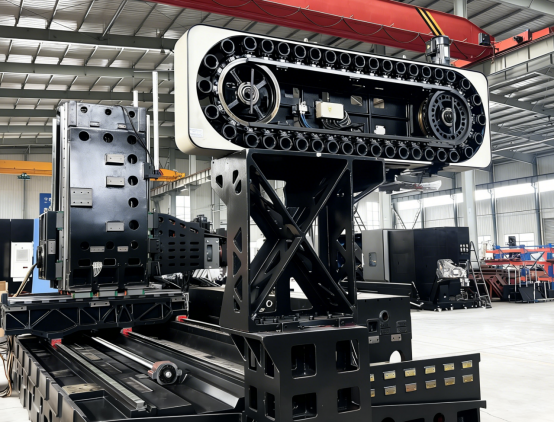
In the aerospace sector, precision is measured in microns, and structural rigidity is the mechanism that makes those measurements possible. A high-performance horizontal turning center must be engineered with massive, high-density cast iron beds, often incorporating materials like HT300 gray iron to absorb the intense kinetic forces generated during heavy-duty cutting operations. This stability is the key to achieving the surface finish requirements demanded for critical aerospace parts. If a machine bed lacks this fundamental rigidity, it will inevitably deflect during aggressive material removal, leading to chatter, vibration marks, and ultimately, scrap. When production managers invest in machines built with these rigorous engineering principles, they are prioritizing long-term profitability and the ability to maintain consistent output quality throughout every shift, even when working with the high-strength alloys common in aerospace.
Versatility Across High-Precision Industrial Sectors
While the aerospace industry sets the gold standard for precision, the technology used to achieve it is highly transferable. Advanced horizontal turning centers are not limited to flight components; their versatility makes them ideal for other high-demand fields, including the automotive, medical, and high-precision mechanical industries. Whether the task involves crafting intricate medical bone screws, high-tolerance automotive transmission shafts, or complex hydraulic manifolds for industrial machinery, the same underlying principles apply. The ability to handle diverse shapes—from simple axial pins to highly complex disk-like geometries—ensures that a facility can pivot between different industrial sectors without needing to overhaul its shop floor. This agility is what defines a truly modern manufacturer, allowing the shop to serve the aerospace market during high-demand periods while maintaining a profitable workflow through automotive and precision mechanical manufacturing during off-cycles.
Quality Assurance Through In-House Craftsmanship
Trust is the most valuable currency in aerospace, and it is earned through transparent, reliable craftsmanship. True quality originates from deep, in-house expertise rather than mere assembly of third-party components. By maintaining absolute control over the production process—from the initial casting of the heavy-duty machine beds to the meticulous final calibration of the CNC motion control—the team at Dongs Solution ensures that each turning center is built for years of stable, reliable service. This dedication to "large-scale factory craftsmanship" is not just a badge of honor; it is a guarantee of quality that ensures every client receives a tool capable of withstanding the most demanding industrial environments. When operators utilize equipment backed by such rigorous engineering standards, they benefit from the long-term operational peace of mind that comes from using a machine built to the absolute highest possible standard.
Strategic Partnerships in Modern Manufacturing
Procuring heavy-duty turning equipment is a major strategic decision, and it is ultimately the beginning of a long-term partnership. A manufacturer needs more than just a piece of equipment; they need a partner that adapts to their specific operational goals. This is why Dongs Solution prioritizes a collaborative approach, offering machines that can be fully customized—from the integration of specific CNC platforms like Fanuc or Siemens to the configuration of specialized hydraulic turrets for unique clamping applications. Furthermore, the commitment to the client extends well beyond the point of sale. With 24-hour technical support, companies are supported through every phase of their production journey. By providing this blend of bespoke hardware, robust build quality, and responsive service, Dongs Solution empowers modern manufacturing facilities to maximize their throughput and maintain a decisive competitive edge in the global marketplace, ensuring that the components driving the modern world forward are produced with absolute reliability.