Unveiling the Technical Core of "Mother Machines": How CNC Machine Tools Bolster the Backbone of Manufacturing
In recent years, the domestic machine tool industry has experienced explosive growth alongside breakthroughs in key technologies; order books are full through the end of the year, with humanoid robotics, new energy vehicles, and aerospace emerging as core demand sectors. CNC machine tool technology—the "intelligent brain" of modern manufacturing—has become an indispensable component of the industry.
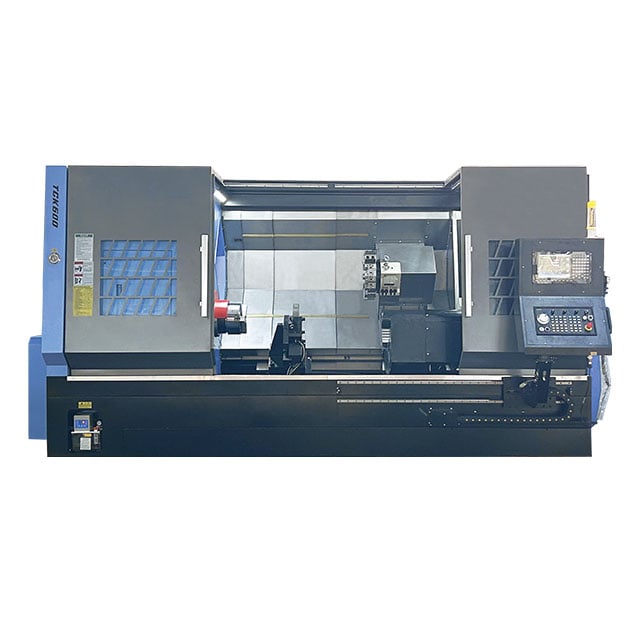
CNC machine tools are the "mother machines" of modern manufacturing; fundamentally, they are complex systems integrating technologies from mechanical, electrical, control, and software domains. In terms of technical composition, a CNC machine tool typically comprises the following core elements:
The machine tool body: This is the mechanical structure that performs the actual cutting operations. It includes components such as the machine bed, column, spindle, and feed mechanisms, which determine the machine's rigidity, stability, and basic machining capabilities. Mechanical design choices—such as whether the bed has undergone aging treatment to relieve internal stress, the use of linear versus box (hardened) guideways, and the spindle support and bearing configuration—directly dictate the machine's ability to withstand heavy cutting loads and maintain geometric accuracy over the long term.
The CNC system: Often hailed as the "brain" of the machine tool, this system consists of both hardware and software. It is responsible for receiving machining programs, performing interpolation calculations, and issuing motion commands. The performance of the CNC system determines the machine's control precision, number of coordinated axes, processing speed, and level of intelligence. High-end CNC systems—such as those from Japan's Fanuc and Germany's Siemens—occupy the top tier of the value chain precisely because of the significant technological barriers they have established regarding algorithm stability and reliability.
The servo drive system: This acts as the execution mechanism. Comprising components such as spindle drive units, feed servo units, and spindle and feed motors, it converts commands from the CNC unit into precise mechanical motion. The servo system's response speed, speed regulation range, and precision directly impact the quality of the machined surface and contour accuracy.
Auxiliary devices and detection/feedback systems: Auxiliary devices include systems for cooling, chip removal, lubrication, and protection; while they may appear peripheral, they are crucial for ensuring the machine's continuous and stable operation. Meanwhile, detection and feedback systems form the foundation of closed-loop control, providing real-time feedback on actual displacement to the CNC unit for error compensation. These four major components are not merely assembled together; rather, they are deeply integrated through electrical, hydraulic, and software interfaces. The ultimate performance of a machine tool depends on the compatibility and synergistic operation of its various subsystems. CNC machine tool technology is driving the transformation and upgrading of the manufacturing industry. As technology continues to advance, CNC machine tools will play an increasingly vital role in manufacturing, helping to create a better future.